
Worm Gearbox vs Helical vs Planetary: Which Gearbox Type Is Best for Your Application?
Choosing the right gearbox type can make or break a machine’s performance. Worm, helical, and planetary gearboxes all reduce speed and increase torque — but they do so in very different ways.
In this guide, we compare worm gearboxes vs helical gearboxes vs planetary gearboxes, explain the strengths and limitations of each, and help you choose the best option for your specific application.
Quick Overview: The Three Gearbox Types
- Worm gearboxes: Compact, right-angle, high ratios, smooth low-speed output
- Helical gearboxes: High efficiency, heavy-duty, long service life
- Planetary gearboxes: Very high torque density, precision, compact inline design
If you’re completely new to worm gear motors, start here: What Is a Worm Gear Motor and When Should You Use One?
Worm Gearboxes: Strengths and Limitations
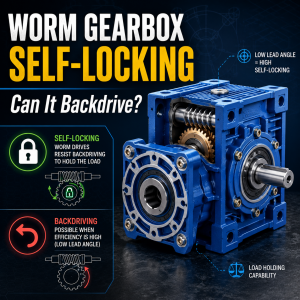
Worm gearboxes use a worm (screw) to drive a worm wheel at 90°, allowing large speed reductions in a single stage.
Best For
- Compact installations
- Low-speed, high-torque applications
- Conveyors, gates, mixers, packaging machines
Advantages
- High reduction ratios in one stage
- Quiet, smooth operation
- Cost-effective for light to medium duty
Limitations
- Lower efficiency than helical or planetary gearboxes
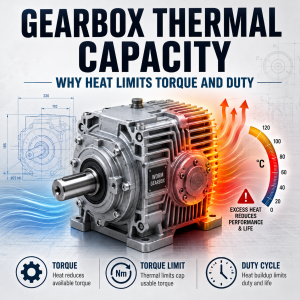
- More heat generation at high ratios
- Not ideal for continuous heavy-duty operation
Efficiency considerations are explained in detail here: Worm Gear Motor Efficiency Explained.
Helical Gearboxes: Efficiency and Durability
Helical gearboxes use angled teeth that mesh smoothly, providing excellent efficiency and load distribution. They are commonly used where reliability and continuous operation are critical.
Best For
- Continuous-duty industrial machinery
- Heavy conveyors and process equipment
- Applications where efficiency matters
Advantages
- High efficiency
- Excellent thermal performance
- Long service life under heavy loads
Limitations
- Larger physical size than worm gearboxes
- Higher upfront cost
- Often heavier
If space allows and duty cycle is high, helical gearboxes often provide the lowest lifetime cost.
Planetary Gearboxes: High Torque in a Compact Package
Planetary gearboxes use multiple gears arranged around a central sun gear, sharing the load across several contact points. This design allows extremely high torque in a compact footprint.
Best For
- High-torque, compact systems
- Precision positioning
- Servo and automation applications
Advantages
- Very high torque density
- High efficiency
- Excellent accuracy and repeatability
Limitations
- Higher cost
- More complex design
- Not always necessary for simple systems
Side-by-Side Comparison
- Efficiency: Planetary > Helical > Worm
- Compactness: Planetary ≈ Worm > Helical
- Cost: Worm < Helical < Planetary
- Best for high ratios: Worm
- Best for continuous duty: Helical
- Best for precision & torque density: Planetary
Which Gearbox Should You Choose?
There is no single “best” gearbox — only the correct choice for your application.
- Choose worm gearboxes for compact, cost-effective, low-speed applications
- Choose helical gearboxes for continuous-duty and efficiency-critical systems
- Choose planetary gearboxes for high torque density and precision control
For a structured selection process, read: Things To Know Before Selecting A Gearbox
Browse Gearboxes Online
If you’re ready to explore available gearbox solutions for your application, you can browse the full range here:
Browse Gearboxes & Gear Motors →
Need help choosing? Start with: How to Choose the Right Worm Gear Motor in 2026 →