
How to Match a Gearbox to a Motor – Complete Selection Guide
Choosing the right gearbox and motor combination is one of the most important parts of building a reliable drive system. If the ratio is wrong, the output speed will be off. If the motor is oversized, you can waste money and space. If the motor speed does not suit the gearbox, performance, efficiency and service life can all suffer. This guide explains how to match a gearbox to a motor properly and links you to the most useful product categories across our range so you can move straight from research to the right product pages.
At Worm Gear Motors Online, we supply a wide range of worm gearboxes, AC motors and geared motor combinations for conveyors, packaging machinery, processing equipment, handling systems and general OEM applications.
Quick Navigation
- Why matching a gearbox to a motor matters
- Step 1: Start with the output speed you need
- Step 2: Choose the right motor speed
- Step 3: Choose the gearbox size and family
- Step 4: Check torque, duty and application load
- Step 5: Check mounting, bore and installation details
- Best gearbox and motor category links
- Common mistakes to avoid
- Final thoughts
Why Matching a Gearbox to a Motor Matters
A motor produces rotational speed and power. A gearbox reduces the motor speed and increases available output torque. To get the best result, both parts need to work together. A correctly matched gearbox and motor combination helps with:
- Achieving the right output RPM
- Delivering enough torque under load
- Reducing heat and unnecessary wear
- Improving machine efficiency
- Making installation easier and more reliable
Many buyers start by comparing gearbox brands and frame sizes, but the best starting point is always the application requirement. Once you know the output speed, load and duty, it becomes much easier to narrow the options.
Step 1: Start With the Output Speed You Need
The first question is simple: how fast does the driven machine need to run? This should be measured at the gearbox output shaft, not at the motor.
For example:
- A conveyor may need a slower, controlled output speed
- A mixer may need higher torque with lower RPM
- A packaging line may need stable, repeatable movement
Once you know your required output speed, you can work backwards using the motor speed and gearbox ratio.
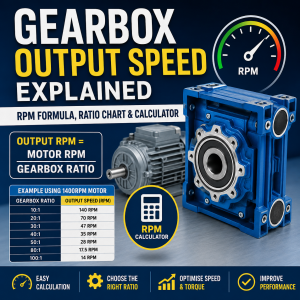
Basic formula:
Output Speed = Motor Speed ÷ Gearbox Ratio
If your motor runs at around 1400 RPM and you need approximately 70 RPM output, you would typically look at a ratio close to 20:1.
If you are still comparing gearbox options, start with our main worm gearboxes category to review the main families we supply.
Step 2: Choose the Right Motor Speed
Motor speed is normally tied to the number of poles. In most industrial applications, buyers will compare 2 pole, 4 pole, 6 pole and 8 pole motors.
- 2 pole motors are typically used where higher speed is needed
- 4 pole motors are one of the most common general-purpose choices
- 6 pole motors suit slower output applications
- 8 pole motors are used where very low speed is preferred before reduction
You can browse these categories here:
In many cases, a 4 pole motor paired with the correct worm gearbox ratio gives a strong balance of performance, availability and flexibility. Where slower output is needed without using extremely high reduction ratios, a 6 pole motor or 8 pole motor may be the better match.
Step 3: Choose the Gearbox Size and Family
Once you know the motor speed and target output speed, the next step is to choose the correct gearbox family and size. This depends on torque demand, mounting preferences, shaft dimensions, available space and brand preference.
We supply several popular worm gearbox ranges, including:
These categories make it easier to compare different housing sizes and product families depending on your application. For example:
- Motovario NMRV030 Worm Gearboxes suit compact installations where space is limited
- Motovario NMRV040 Worm Gearboxes are a strong next step up when more torque or a larger size is needed
- Varvel FRS40 Worm Gearboxes and Varvel FRS50 Worm Gearboxes are useful options when comparing compact and mid-size worm gearbox requirements
- Transtecno CM040 Worm Gearboxes and Transtecno CM063 Worm Gearboxes are popular for compact OEM and handling systems
- STM RMI 28 Worm Gearboxes and STM RMI 50 Worm Gearboxes are ideal when comparing different STM size options
If your application is highly space-sensitive, smaller gearbox families often make more sense. If the machine needs more output torque or a larger shaft size, stepping up to the next housing size is usually the safer route.
Step 4: Check Torque, Duty and Application Load
This is where many buyers go wrong. Matching the ratio alone is not enough. The gearbox also needs to handle the required torque at the duty level your machine demands.
You should always consider:
- Running load
- Starting load
- Shock loading
- Daily running hours
- Start-stop frequency
- Ambient conditions
A lightly loaded conveyor and a heavily loaded mixer may use the same output speed but require completely different gearbox sizes. Where there is any uncertainty, it is normally better to choose a more suitable size than to run a gearbox too close to its limit.
If you are comparing across different brands, our main worm gearbox category and brand sub-categories can help you review the closest options quickly:
- All Worm Gearboxes
- Motovario NMRV Worm Gearboxes
- Varvel Worm Gearboxes
- Transtecno Worm Gearboxes
- STM Worm Gearboxes
Step 5: Check Mounting, Bore and Installation Details
Before placing an order, make sure the gearbox and motor physically match your machine layout.
Key checks include:
- Input motor size and flange compatibility
- Output bore diameter
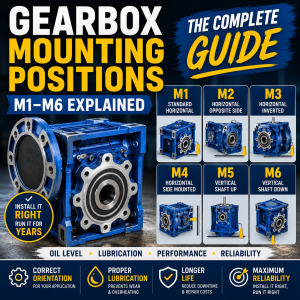
- Mounting position
- Foot or flange arrangement
- Shaft orientation
- Space available around the unit
If you already know the gearbox family you need, narrowing down by category is often the fastest route. For example, if you already know you need a compact Motovario unit, going straight to NMRV030 or NMRV040 can save time. If you are comparing across brands, you may prefer to review Varvel FRS40, Transtecno CM040 or STM RMI 28 side by side.
Best Gearbox and Motor Category Links for Matching a Drive System
If you want to compare the most useful categories quickly, these are good places to start:
Worm Gearbox Categories
- Worm Gearboxes
- Motovario NMRV Worm Gearboxes
- Motovario NMRV030 Worm Gearboxes
- Motovario NMRV040 Worm Gearboxes
- Varvel Worm Gearboxes
- Varvel FRS40 Worm Gearboxes
- Varvel FRS50 Worm Gearboxes
- Transtecno Worm Gearboxes
- Transtecno CM040 Worm Gearboxes
- Transtecno CM063 Worm Gearboxes
- STM Worm Gearboxes
- STM RMI 28 Worm Gearboxes
- STM RMI 50 Worm Gearboxes
Motor Categories
- AC Motors
- 2 Pole Electric Motors
- 4 Pole Electric Motors
- 6 Pole Electric Motors
- 8 Pole Electric Motors
Common Mistakes to Avoid When Matching a Gearbox to a Motor
- Choosing by ratio alone: ratio matters, but torque capacity and duty are just as important
- Ignoring motor pole count: different motor speeds will change the final output result
- Undersizing the gearbox: this can reduce service life and cause overheating
- Skipping the installation checks: flange size, bore size and mounting position all matter
- Not planning for application load: starting torque and shock loads should always be considered
Final Thoughts
The best way to match a gearbox to a motor is to work through the process logically. Start with your required output speed. Then choose the motor speed, ratio, gearbox family and size that suit the application. Finally, confirm torque, duty and physical fit before ordering.
If you are still comparing options, browse our full worm gearbox range and AC motor categories to shortlist the best setup for your machine. You can also compare major worm gearbox families including Motovario NMRV, Varvel, Transtecno and STM depending on the size, output and mounting style you need.
Need help choosing the right gearbox and motor combination?
Browse the category links above or contact us for help matching the correct worm gearbox, motor speed and ratio for your application.