
Gearbox Noise Explained: What’s Normal and What Isn’t?
Industrial gearboxes are rarely completely silent. A steady hum, light gear whine or consistent running sound can be normal, particularly when a gearbox is operating under load. However, grinding, knocking, rattling, scraping or a sudden increase in noise can indicate lubrication problems, worn bearings, damaged gears, misalignment or an overloaded gearbox.
The most important question is not simply, “Is the gearbox making noise?” It is:
Has the sound changed, become louder, appeared suddenly or been accompanied by heat, vibration, leakage or reduced performance?
This guide explains which gearbox sounds may be normal, which noises require investigation, the common causes of gearbox noise and how to decide whether a gearbox needs maintenance or replacement.
Quick Guide: Normal Gearbox Noise vs Warning Signs
| Sound or Symptom | Possible Meaning | Recommended Action |
|---|---|---|
| Steady, consistent hum | Normal motor and gear operation | Monitor for changes |
| Light, constant gear whine | May be normal for the gearbox type and speed | Compare with previous operation |
| Brief click when starting or stopping | Backlash, brake operation or load movement | Usually monitor unless severe |
| New or rapidly increasing whine | Wear, poor alignment, incorrect load or lubrication issue | Inspect before continued operation |
| Grinding or scraping | Possible gear, bearing or lubrication failure | Stop safely and investigate |
| Knocking or repetitive clunking | Damaged gear tooth, loose component or excessive backlash | Inspect urgently |
| Rattling at low load | Loose mounting, backlash, coupling wear or vibration | Check installation and driven equipment |
| Squealing | Bearing, seal, brake or belt-related problem | Identify the true source |
| Noise with high temperature | Overload, incorrect oil level, friction or poor ventilation | Stop and inspect |
| Noise with strong vibration | Misalignment, imbalance, bearing damage or loose mounting | Investigate promptly |
A gearbox that has always produced a steady, predictable sound may be operating normally. A gearbox that suddenly sounds different should not be ignored.
Is It Normal for a Gearbox to Make Noise?
Yes. Every gearbox produces some sound because its gears, bearings, shafts and lubricant are moving under load. The electric motor, coupling, machine frame and driven equipment can also transmit noise through the installation.
Normal gearbox noise is usually:
- Steady rather than intermittent
- Consistent at the same operating speed
- Similar from one operating cycle to the next
- Not accompanied by excessive vibration
- Not accompanied by a sudden rise in temperature
- Not accompanied by metal particles or oil leakage
- Not becoming progressively louder
The exact sound depends on the gearbox design. A worm gearbox will not necessarily sound the same as an inline gearbox or a helical bevel gearbox.
What Does a Normal Gearbox Sound Like?
A healthy industrial gearbox may produce a combination of the following sounds:
A steady hum
A smooth electrical and mechanical hum is common, especially when the gearbox is attached directly to an AC motor. Some of the sound may be coming from the motor rather than the gearbox itself.
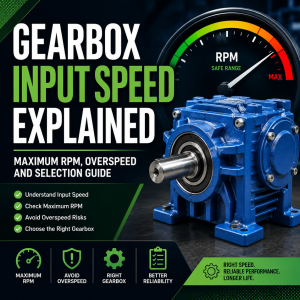
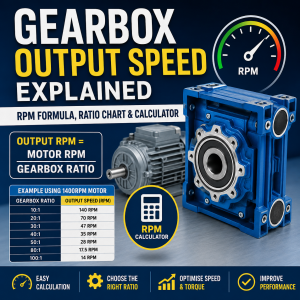
Standard geared applications commonly use 4 pole electric motors, which typically run at approximately 1400rpm on a 50Hz supply.
A light gear whine
Meshing gears can create a steady tonal sound. A light and consistent whine may be normal, particularly at higher input speeds. The important factor is whether the sound is stable and has always been present.
A slight change under load
A gearbox may sound different when loaded compared with running unloaded. Load changes the forces acting on the gear teeth, bearings and shafts. A small, repeatable change can be normal.
A brief click during starting or stopping
A small click or movement can be caused by gearbox backlash, coupling movement or a motor brake engaging and releasing. Applications that must stop and hold a load may use dedicated brake motors.
A loud impact, repeated clunk or large amount of movement is not the same as a minor start-stop click and should be investigated.
What Gearbox Noises Are Not Normal?
Abnormal gearbox noises are usually new, irregular, harsh or accompanied by other symptoms.
Warning sounds include:
- Grinding
- Scraping
- Knocking
- Clunking
- Rattling
- Squealing
- Clicking once per shaft rotation
- A whine that becomes noticeably louder
- A sound that changes suddenly without a known operating change
Never place hands, tools or listening devices near exposed rotating parts while machinery is operating. Isolate and lock off the equipment before removing guards or carrying out physical inspection.
1. Gearbox Whining Noise
A gearbox whine is a high-pitched, tonal sound related to gear meshing and rotational speed. A mild, consistent whine can be normal. A new, louder or changing whine may indicate a developing problem.
Possible causes of gearbox whine
- Normal gear mesh frequency
- High input speed
- Worn gear teeth
- Incorrect gear contact pattern
- Misalignment between the motor, gearbox and machine
- Insufficient or unsuitable lubricant
- Excessive load
- Resonance through the machine frame or guarding
- Variable-frequency drive settings
If the whine has always been present and remains stable, it may simply be a characteristic of the gearbox and installation. If it becomes louder over time, investigate the load, oil condition, alignment and bearing condition.
When motor speed is controlled by an inverter, changing frequency can alter both motor and gearbox noise. Browse our single phase TecDrive inverters and three phase TecDrive inverters for suitable variable-speed options.
2. Grinding or Scraping Noise
Grinding is not a normal gearbox sound. It can suggest metal-to-metal contact, severe bearing wear, damaged gear teeth, internal contamination or a lack of effective lubrication.
Common causes of grinding
- Low oil level
- Incorrect lubricant
- Lubricant breakdown
- Failed or severely worn bearing
- Broken or damaged gear teeth
- Foreign material inside the gearbox
- Misaligned shafts
- Internal components contacting the housing
If grinding appears suddenly, the safest action is normally to stop the machine using the correct shutdown procedure and investigate before further operation. Continuing to run a grinding gearbox can turn a repairable problem into complete failure.
3. Knocking or Clunking Noise
A repeating knock or clunk often points to a defect that occurs once per rotation or once each time a damaged section of gearing passes through the load zone.
Possible causes
- Broken, chipped or cracked gear tooth
- Excessive backlash
- Loose gear, shaft or key
- Damaged coupling
- Loose sprocket, pulley or driven component
- Sudden load reversal
- Shock loading
- Loose mounting bolts
A knock that repeats at a regular interval is particularly important because it may correspond with shaft rotation or a damaged tooth entering mesh.
Check whether the sound is truly inside the gearbox. Loose chain drives, couplings, guards, pulleys and conveyor components can produce similar symptoms.
4. Rattling Gearbox Noise
Rattling can occur when components repeatedly move through clearance or vibrate against nearby parts. It may be most noticeable at low speed, low load or during rapid speed changes.
Common causes of rattling
- Normal backlash becoming audible at very low load
- Excessive gear wear
- Loose gearbox mounting bolts
- Loose motor, coupling or guard
- Worn key or keyway
- Damaged flexible coupling element
- Rapid torque reversals
- Poor inverter tuning
- Driven equipment transmitting vibration into the gearbox
Do not assume that every rattle means internal gear failure. Begin by checking the complete drive system, including the motor feet, flange, adaptor, gearbox mounting, torque arm, coupling, shaft keys and driven machine.
5. Clicking or Ticking Noise
A regular clicking or ticking noise can be linked to one rotating component. Its frequency may help identify whether the source is the motor shaft, gearbox input, gearbox output or driven equipment.
Potential causes
- Damaged gear tooth
- Foreign material inside the gearbox
- Bearing defect
- Loose key
- Damaged coupling
- Chain, sprocket or belt problem
- Fan cowl or motor fan contact
If the click occurs once per output shaft revolution, inspect the output side and driven equipment. If it occurs much faster, the source may be closer to the motor or gearbox input.
6. Squealing or Screeching Noise
A high-pitched squeal may not be coming from the gears themselves. It can originate from a bearing, shaft seal, brake, belt, motor fan or coupling.
Possible sources
- Dry or damaged bearing
- Seal running dry or incorrectly
- Motor brake dragging
- Loose or slipping belt
- Misaligned coupling
- Motor fan rubbing the cowl
- Insufficient lubrication
Where a brake motor is fitted, confirm that the brake releases fully before blaming the gearbox. A partially engaged brake can create noise, excess heat and poor machine performance.
7. Humming With Little or No Output Movement
A motor that hums while the gearbox output fails to turn may indicate an electrical or mechanical blockage rather than a normal gearbox noise.
Possible causes
- Single phasing on a three-phase motor
- Incorrect motor wiring
- Seized gearbox
- Jammed driven machine
- Brake failing to release
- Overloaded motor
- Failed coupling
- Incorrect inverter settings
Do not repeatedly energise a stalled motor. This can cause rapid overheating and motor damage. Isolate the machine and determine whether the motor, brake, gearbox or driven equipment is preventing rotation.
Why Do Worm Gearboxes Make Noise?
Worm gearboxes use a worm screw that slides against a worm wheel. This sliding action gives a compact right-angle reduction and allows high ratios in a small housing, but it also creates a different sound and heat profile from helical gearing.
A healthy worm gearbox may produce a smooth hum or gentle whirring sound. It should not normally produce harsh grinding, repeated knocking or rapidly increasing noise.
Common worm gearbox noise causes
- Incorrect or degraded lubricant
- High ratio and associated sliding contact
- Overload
- Worn worm wheel
- Input or output bearing wear
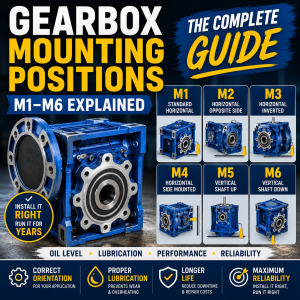
- Incorrect mounting position
- Misalignment with the motor or driven shaft
- Loose torque arm or mounting bolts
For replacement options, compare our Motovario NMRV050 worm gearboxes, Tramec XC63 worm gearboxes and Varvel FRS70 worm gearboxes.
Are Helical Gearboxes Quieter Than Worm Gearboxes?
Helical gears generally engage more gradually than straight-cut gears, which can help reduce vibration and produce smoother operation. However, gearbox noise depends on much more than gear type.
Noise is also affected by:
- Gear manufacturing quality
- Input speed
- Gear ratio
- Load
- Lubrication
- Bearing condition
- Housing stiffness
- Installation alignment
- Machine frame resonance
For applications where inline shaft arrangement and efficient helical gearing are required, browse our inline gearboxes. For right-angle helical bevel applications, see our Motovario BA52 and Motovario BA72 helical bevel gearboxes.
Can Low Gearbox Oil Cause Noise?
Yes. Insufficient lubricant can increase friction and prevent the gear teeth and bearings from receiving the oil film they need. This may produce whining, rumbling, grinding, overheating and accelerated wear.
Possible signs of low or ineffective lubrication
- Rising gearbox temperature
- New whining or grinding sound
- Visible oil leakage
- Discoloured or burnt-smelling oil
- Metal particles in the lubricant
- Increased vibration
- Rapid bearing or gear wear
Too much oil can also cause problems. Overfilling may increase churning losses, heat and leakage. Always use the manufacturer’s specified lubricant type, quantity and oil level for the gearbox mounting position.
Can the Wrong Oil Make a Gearbox Noisy?
Yes. Gearbox lubricant is selected according to gear type, load, speed, operating temperature, material compatibility and application conditions.
Using an unsuitable lubricant can result in:
- Inadequate film strength
- Excessive friction
- Poor cold-start performance
- Overheating
- Seal compatibility problems
- Foaming
- Accelerated gear or bearing wear
Do not mix lubricants unless compatibility has been confirmed. When replacing oil, follow the gearbox manufacturer’s maintenance instructions.
Can Misalignment Cause Gearbox Noise?
Yes. Misalignment can place abnormal radial and axial loads on bearings and shafts. It can also alter gear tooth contact and transmit vibration through the machine.
Common alignment problems
- Motor and gearbox input not correctly centred
- Coupling angular misalignment
- Coupling parallel misalignment
- Gearbox output shaft not aligned with the driven shaft
- Machine base distortion
- Soft foot beneath the motor or gearbox
- Incorrect torque arm installation
Misalignment may cause noise, vibration, heat, coupling wear, seal failure and shortened bearing life. Check alignment after replacing a motor, gearbox, coupling or machine component.
Can Overloading Make a Gearbox Noisy?
Yes. A gearbox operating above its rated torque can become hotter, louder and less reliable. Overload increases tooth contact forces, bearing loads and shaft deflection.
Common causes of gearbox overload
- Driven machine blockage
- Conveyor carrying more material than designed
- Incorrectly selected gearbox size
- Motor power increased without reviewing the gearbox
- Frequent starts and stops
- Shock loads
- High inertia load
- Incorrect service factor
- Operating duty increased after installation
A gearbox should not be selected only by ratio. Output torque, service factor, duty cycle, mounting position, radial load and thermal capacity must also be considered.
For conveyor applications, view our motors for conveyors alongside our main industrial gearbox range.
Can Gearbox Backlash Cause Noise?
Backlash is the small clearance between mating gear teeth. Some backlash is necessary to allow lubrication, thermal expansion and reliable gear movement.
Backlash may become audible when:
- The load repeatedly reverses direction
- The motor starts and stops rapidly
- The gearbox runs with almost no load
- The driven machine creates torque pulsations
- The gearing has become worn
- A coupling or keyway has excessive clearance
A small click during a direction change may be normal. Repeated hammering, large output movement or increasing backlash can indicate wear and should be checked.
Why Is a New Gearbox Noisy?
A new gearbox can sometimes sound different from the old unit without being defective. Reasons include:
- Different gear design
- Different housing material
- Different motor speed
- Different gear ratio
- New seals and bearings
- Different lubricant
- Changed mounting stiffness
- Machine guarding amplifying the sound
- Incorrect installation or alignment
Before assuming a new gearbox is faulty, confirm that its ratio, input speed, motor size, output bore, mounting position and torque capacity match the application.
Also check that transport plugs, breathers and oil-level requirements have been handled according to the manufacturer’s instructions.
Why Does Gearbox Noise Change With Speed?
Gear mesh frequency rises as rotational speed increases, so a gearbox may naturally produce a higher-pitched sound at higher speed. Resonance can also make certain speeds noticeably louder than others.
If the gearbox is controlled by an inverter, noise may change because of:
- Motor switching frequency
- Motor speed
- Rapid acceleration or deceleration
- Torque boost settings
- Mechanical resonance
- Operation below the gearbox’s preferred speed range
A sound that occurs only within a narrow speed band may be resonance rather than direct gear damage. However, it should still be assessed if vibration is strong or the sound is severe.
Why Does a Gearbox Make More Noise Under Load?
Gear and bearing forces rise as load increases, so a gearbox may become slightly louder under load. A major change can indicate that the gearbox is overloaded, worn or incorrectly aligned.
Compare:
- Noise when unloaded
- Noise at normal load
- Noise at maximum expected load
- Gearbox temperature
- Motor current
- Vibration
If noise rises sharply with a relatively small increase in load, verify the gearbox torque rating and service factor.
Is the Noise Coming From the Gearbox or the Motor?
Noise can travel through shafts, couplings, machine frames and guards, making the source difficult to locate.
The apparent gearbox noise may actually come from:
- Motor bearings
- Motor cooling fan
- Motor fan cowl
- Electromagnetic motor hum
- Motor brake
- Coupling
- Belt or pulley
- Chain and sprocket
- Driven machine bearings
- Loose guarding
When safe and practical, isolate the components methodically rather than replacing the gearbox based only on where the sound appears loudest.
How to Diagnose Gearbox Noise Safely
Use a structured approach. Do not remove guards or touch rotating machinery while it is operating.
Step 1: Record the original symptom
Note when the sound occurs:
- At start-up
- At constant speed
- During acceleration
- During deceleration
- Only under load
- Only when warm
- During direction reversal
Step 2: Compare with previous operation
A changed sound is often more significant than the absolute loudness. Ask operators when the sound first appeared and whether it is getting worse.
Step 3: Check for associated symptoms
- Excess heat
- Vibration
- Oil leakage
- Reduced output speed
- Motor overload trips
- Burning smell
- Metallic debris
Step 4: Inspect the installation after isolation
Once the machinery has been safely isolated and locked off, check:
- Mounting bolts
- Motor flange and adaptor
- Coupling condition
- Keys and keyways
- Torque arm
- Shaft alignment
- Oil level and visible leakage
- Guards and covers
Step 5: Review the application
Confirm the motor power, gearbox ratio, output speed, torque demand, duty cycle, start frequency and service factor.
Step 6: Compare noise over time
Where condition monitoring is used, compare current vibration and sound readings with a known healthy baseline. Trends are generally more useful than a single isolated measurement.
When Should You Stop a Noisy Gearbox?
Stop the equipment using the correct safe procedure if the gearbox develops:
- Grinding or severe scraping
- Heavy knocking
- Sudden high vibration
- Rapidly rising temperature
- Smoke or burning smell
- Major oil leakage
- Metal fragments in the oil
- Seizure or intermittent locking
- Loss of output drive
Continuing to run a gearbox with these symptoms can damage the motor, coupling, machine shaft and surrounding equipment as well as the gearbox itself.
Can a Noisy Gearbox Be Repaired?
Whether repair is worthwhile depends on the gearbox size, brand, age, internal damage, spare-part availability and cost of downtime.
A repair may involve:
- Replacing bearings
- Replacing seals
- Replacing gears or shafts
- Correcting backlash
- Flushing and replacing lubricant
- Repairing mounting or alignment problems
For smaller standard worm gearboxes, complete replacement may be faster and more economical than stripping and rebuilding the unit. Larger helical, bevel and specialist gearboxes may be more suitable for overhaul.
When Should a Noisy Gearbox Be Replaced?
Replacement may be the best option when:
- The housing is damaged
- Gear teeth are badly worn or broken
- Shafts are damaged
- Spare parts are unavailable
- The gearbox is obsolete
- Repair costs approach the price of a new unit
- Downtime is more costly than replacement
- The original gearbox was incorrectly sized
- Repeated failures indicate a wider selection problem
When selecting a replacement, identify the manufacturer, model, ratio, input flange, output bore, mounting position, torque requirement and motor power.
Browse our gearboxes, inline gearboxes and gearbox accessories to compare suitable replacement options.
How to Reduce Gearbox Noise
The correct solution depends on the source of the noise. Possible improvements include:
- Correcting alignment
- Tightening mounting bolts
- Repairing or replacing couplings
- Using the correct lubricant and oil quantity
- Correcting gearbox mounting position
- Reducing overload
- Improving the machine base
- Preventing guard and panel resonance
- Adjusting inverter acceleration and switching settings
- Replacing worn bearings or gearing
- Choosing a gearbox with suitable torque and service factor
Do not attempt to hide an abnormal mechanical sound using acoustic insulation before finding its cause. Noise reduction materials may make the machine quieter while the underlying fault continues to worsen.
Gearbox Noise Inspection Checklist
| Check | What to Look For |
|---|---|
| Sound history | New, worsening or previously normal? |
| Operating condition | Start-up, full load, low load or warm operation? |
| Temperature | Stable or rising abnormally? |
| Vibration | Smooth, pulsing or severe? |
| Lubrication | Correct oil, level and condition? |
| Mounting | Bolts, torque arm and base secure? |
| Alignment | Motor, coupling and output shaft aligned? |
| Load | Within rated torque and service factor? |
| Driven equipment | Chains, belts, bearings and guards healthy? |
| Gearbox identity | Correct model, ratio and mounting position? |
Gearbox Noise FAQ
Is a whining gearbox normal?
A light and consistent whine can be normal, particularly at higher speed. A new, rapidly increasing or irregular whine may indicate wear, misalignment, overload or a lubrication problem.
Why is my gearbox making a grinding noise?
Grinding can be caused by insufficient lubrication, damaged gears, failed bearings, contamination or internal metal-to-metal contact. The machine should normally be stopped safely and inspected.
Can low gearbox oil cause noise?
Yes. Low oil can increase friction and cause whining, rumbling, grinding, heat and accelerated wear. Always use the specified lubricant and oil level.
Why does my gearbox make noise only under load?
Load increases the forces acting on gears, shafts and bearings. A small change may be normal, but a major increase can indicate overload, wear, misalignment or insufficient gearbox capacity.
Can gearbox backlash cause a clunk?
Yes. Backlash can create a small click or clunk when torque changes direction. Severe or increasing clunking may indicate worn gears, keys, couplings or excessive clearance.
Why is my new gearbox louder than the old one?
The new gearbox may use a different gear design, lubricant, housing or motor speed. Installation alignment, mounting stiffness and machine resonance should also be checked.
Can an inverter make a gearbox noisy?
An inverter can change motor speed, torque delivery and vibration. Certain speeds or settings may excite mechanical resonance, although the noise may originate from the motor rather than the gearbox.
How do I know whether the gearbox bearings are failing?
Bearing damage can produce rumbling, growling, squealing, clicking, heat and vibration. Proper diagnosis may require inspection, vibration analysis or dismantling.
Should a noisy gearbox be replaced?
Not always. Loose mounting, alignment or lubrication problems may be repairable. Replacement is more likely when gears, shafts or the housing are badly damaged or when repair is uneconomical.
What information is needed to replace a noisy gearbox?
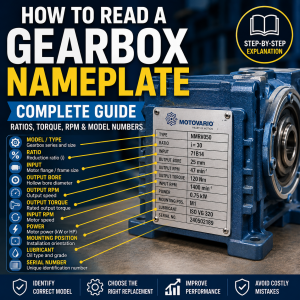
Record the manufacturer, model, ratio, motor input size, output bore, mounting position, motor power, output speed and application load. A clear nameplate photo is extremely useful.
Need Help Replacing a Noisy Gearbox?
A steady, unchanged hum or light gear whine may be normal. Grinding, knocking, scraping, sudden vibration or rapidly increasing noise should be investigated before the gearbox suffers further damage.
When identifying a replacement gearbox, check:
- Manufacturer and model
- Gearbox ratio
- Motor frame and flange
- Output bore or shaft
- Mounting position
- Motor power
- Required output torque
- Duty cycle and service factor
Browse our full range of industrial gearboxes, including worm gearboxes, inline gearboxes and helical bevel gearbox options.
If you are unsure which gearbox you need, send us a clear photograph of the gearbox nameplate together with the motor power, output bore, mounting arrangement and details of the application.