Helical Bevel Gearboxes Explained: How They Work & When to Use Them
Helical bevel gearboxes are a popular choice in industrial power transmission because they combine strong efficiency, smooth torque transfer, and compact right-angle design. They are widely used across conveyors, packaging systems, material handling lines, processing equipment, and heavy-duty machinery where reliable 90-degree power transmission is essential.
If you are comparing gearbox types or trying to decide whether a helical bevel unit is the right fit for your application, this guide explains how helical bevel gearboxes work, what makes them different, where they are commonly used, and when they are the best option compared to other reducer styles.
At Worm Gear Motors Online, we supply a wide range of helical bevel gearboxes, including genuine Motovario B Series bevel gearboxes and popular sizes such as the Motovario B103 helical bevel gearboxes range.
What Is a Helical Bevel Gearbox?
A helical bevel gearbox is a speed reducer that uses a combination of helical gears and bevel gears to transmit power efficiently while changing the direction of drive by 90 degrees. This gives you the smooth running characteristics of helical gearing with the space-saving right-angle output of a bevel gear stage.
In simple terms, the helical gear stages help reduce speed and increase torque gradually and efficiently, while the bevel gear arrangement redirects the output shaft to create a compact right-angle drive layout. This makes helical bevel gearboxes ideal for applications where installation space, efficiency, and torque capacity all matter.
They are commonly used as a premium alternative to worm gearboxes in more demanding applications, especially where energy efficiency, continuous duty, and higher performance are priorities.
How Does a Helical Bevel Gearbox Work?
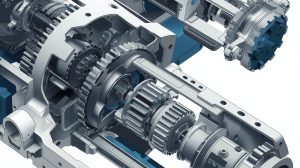
A helical bevel gearbox works by taking rotary input power from an electric motor and passing it through a series of gears that reduce speed and increase output torque. The exact arrangement varies by model, but the operating principle is generally the same.
First, the input shaft is driven by the motor. The power then passes through one or more helical gear stages, which provide smooth and efficient speed reduction. Because helical gears have angled teeth, they engage progressively rather than suddenly, which reduces vibration and spreads the load across more tooth contact area.
At the output stage, a bevel gear set redirects the drive through a 90-degree angle. This allows the gearbox to deliver strong torque in a compact right-angle form, making it easier to integrate into machinery where straight inline layouts are not practical.
The result is a gearbox that offers:
- Right-angle power transmission
- Smooth and quiet running
- Strong torque output
- High operating efficiency
- Reliable performance in continuous-duty systems
Why Helical Bevel Gearboxes Are So Popular
Helical bevel gearboxes are widely used because they offer a strong balance of mechanical efficiency, durability, and layout flexibility. In many industrial applications, they provide better long-term performance than simpler or lower-efficiency alternatives.
Some of the main reasons engineers and buyers choose helical bevel gearboxes include:
- High efficiency: Helical bevel designs are typically much more efficient than worm gearboxes, especially in higher-duty applications.
- Smooth power transmission: Helical gear engagement helps reduce shock loading, vibration, and noise.
- Strong torque handling: These gearboxes are well suited to medium and heavy-duty industrial loads.
- Compact right-angle layout: The 90-degree output helps save space in tighter machine designs.
- Long service life: Better load distribution and reduced friction help support durability.
- Versatile mounting options: Many ranges offer flexible input and output configurations for different machinery setups.
This combination makes them a strong choice where performance matters more than simply selecting the cheapest reducer type.
Helical Bevel Gearboxes vs Worm Gearboxes
One of the most common comparisons is between helical bevel gearboxes and worm gearboxes. Both can provide right-angle power transmission, but they are quite different in how they perform.
Worm gearboxes are often chosen because they are compact, simple, and cost-effective. They can work well in lighter-duty applications or where high ratios are needed in a small housing. However, worm gearboxes are generally less efficient, especially under continuous operation, because of the sliding contact between the worm and wheel.
Helical bevel gearboxes, by contrast, are usually preferred where higher efficiency, better thermal performance, smoother running, and stronger long-term load handling are needed. They are particularly well suited to industrial conveyors, automated systems, process equipment, and more demanding drive duties.
That is why many users move toward helical bevel solutions when they need a more premium gearbox with stronger all-round performance.
Helical Bevel Gearboxes vs Inline Gearboxes
Inline gearboxes and helical bevel gearboxes both offer strong efficiency, but the key difference is output direction. Inline gearboxes keep the motor and output shaft on the same axis, which makes them ideal where straight-through transmission is preferred.
Helical bevel gearboxes are better when the machine layout needs a 90-degree output. This can help reduce overall installation length, improve space usage, and allow easier integration into conveyors, transfer systems, and compact production equipment.
In other words, if you need the efficiency and smoothness of helical gearing but your layout calls for a right-angle drive, a helical bevel gearbox is often the ideal solution.
Main Advantages of Helical Bevel Gearboxes
Helical bevel gearboxes offer several key advantages that make them attractive for both OEM machine builders and end users looking for durable industrial gear reduction.
1. Excellent Efficiency
Efficiency is one of the biggest reasons to choose a helical bevel gearbox. Compared with many right-angle alternatives, these units typically deliver lower energy loss and better overall performance, which becomes especially important in equipment that runs for long hours every day.
2. Smooth and Quiet Operation
Helical teeth engage gradually, which produces smoother meshing than straight-cut gear forms. This helps reduce vibration, noise, and mechanical shock, making helical bevel gearboxes a good option where smoother running is important.
3. Strong Torque Capacity
Because load is shared across multiple teeth during engagement, helical gearing helps provide strong torque transmission and dependable performance under load. This makes the design well suited to industrial conveying, material handling, and processing systems.
4. Compact Right-Angle Design
Changing the output direction by 90 degrees helps machine designers fit powerful gear reduction into tighter spaces. This is especially useful in conveyors, transfer systems, and equipment where motor placement needs to be offset from the driven shaft.
5. Better Continuous-Duty Performance
For machinery that runs all day, efficiency and heat management become critical. Helical bevel gearboxes are a strong choice for continuous-duty applications because they generally run cooler and more efficiently than lower-performance right-angle gearbox types.
Common Applications for Helical Bevel Gearboxes
Helical bevel gearboxes are used across a wide range of industrial sectors because they suit both compact layouts and demanding torque requirements. Typical applications include:
- Conveyor systems in manufacturing, logistics, and packaging lines
- Material handling equipment such as transfer systems, feeders, and elevators
- Packaging machinery requiring smooth motion and reliable output torque
- Mixers and agitators in process industries
- Food and beverage equipment where dependable continuous operation is important
- Recycling and waste processing systems
- Automation machinery with space constraints and right-angle drive layouts
- Pumps, fans, and auxiliary drive systems where efficient gear reduction is required
They are especially useful in applications where the machine needs to run smoothly for long periods without sacrificing torque capacity.
When Should You Use a Helical Bevel Gearbox?
A helical bevel gearbox is often the right choice when you need a combination of right-angle power transmission, high efficiency, and strong torque handling. They are ideal for installations where a straight inline gearbox does not suit the layout, but you still want better performance than a typical worm gearbox can offer.
You should strongly consider a helical bevel gearbox when:
- You need a 90-degree output shaft arrangement
- Your application runs for long operating hours
- Energy efficiency is important
- You want smoother operation with lower vibration
- The machine sees medium to heavy-duty loading
- You need a more premium gearbox for long-term industrial reliability
For many industrial buyers, this makes helical bevel gearboxes a smart middle ground between compact worm reducers and straight-through inline helical gearboxes.
How to Select the Right Helical Bevel Gearbox
Choosing the right helical bevel gearbox is not just about picking a ratio. To get the best performance and service life, you need to match the gearbox to the real operating demands of the machine.
1. Output Torque Requirement
Start with the torque needed at the output shaft. The gearbox must be capable of handling not only normal running load but also any peak demand, startup torque, or shock loading.
2. Required Gear Ratio
The ratio determines the output speed and torque multiplication. Higher ratios reduce output speed more aggressively while increasing available torque. The correct ratio depends on your motor speed and machine requirement.
3. Motor Input Size and IEC Mounting
Many industrial helical bevel gearboxes are designed for IEC motor compatibility. Make sure the gearbox input matches the motor frame size and mounting style you plan to use.
4. Output Configuration
Check whether you need a hollow bore output, solid shaft output, shrink disc arrangement, or another configuration that suits your driven equipment.
5. Duty Cycle and Service Factor
Applications with long running hours, heavy starts, shock loads, or reversing duty may need a higher service factor. This is essential for long-term gearbox life.
6. Mounting Position
Mounting orientation can affect installation, lubrication behaviour, and overall layout. Always confirm the unit is suitable for the intended mounting position.
7. Environmental Conditions
Dust, moisture, washdown exposure, temperature, and contamination risk can all affect gearbox choice. In harsher environments, sealing and housing quality matter even more.
Why Motovario B Series Helical Bevel Gearboxes Are a Popular Choice
Among the best-known helical bevel solutions on the market, the Motovario B Series bevel gearboxes are widely respected for their build quality, industrial reliability, and flexible range of sizes and ratios.
These gearboxes are commonly used across material handling, food production, process systems, and general manufacturing because they combine robust design with strong application versatility. Whether you need a compact size for lighter-duty equipment or a larger industrial unit for heavier torque demands, the B Series gives buyers a trusted platform.
One particularly popular range is the Motovario B103 helical bevel gearbox, which is a strong option for medium-duty and heavier industrial applications where dependable right-angle gear reduction is required.
Signs a Helical Bevel Gearbox May Be the Better Upgrade
If you are currently using a worm gearbox or another reducer type and seeing performance limitations, it may be time to consider a helical bevel upgrade.
Common signs include:
- Excessive heat build-up in continuous operation
- Poor efficiency and unnecessary energy loss
- Noise or vibration under load
- Need for stronger torque handling
- Demand for a longer-lasting industrial gearbox solution
- Need to improve reliability on conveyors or process machinery
In many cases, moving to a helical bevel design can improve overall system performance while reducing wear and operating losses over time.
Final Thoughts
Helical bevel gearboxes are one of the best solutions for industrial applications that need efficient right-angle power transmission, smooth running performance, and strong torque output. They combine the benefits of helical gearing with the layout flexibility of bevel gearing, making them ideal for conveyors, automation systems, material handling, and processing equipment.
If you need a gearbox that offers better performance than a basic worm reducer and better layout flexibility than an inline unit, a helical bevel gearbox is often the right answer.
To explore available options, browse our full range of helical bevel gearboxes, shop genuine Motovario B Series bevel gearboxes, or view the Motovario B103 helical bevel gearboxes category for a proven industrial solution.