Aluminium vs Cast Iron Gearboxes: Which Housing Material Should You Choose?
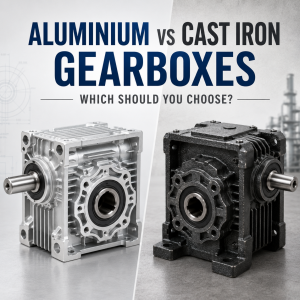
When choosing a gearbox, most buyers focus on ratio, output torque, bore size, mounting style and motor compatibility. However, the gearbox housing material is just as important. The choice between an aluminium gearbox and a cast iron gearbox can affect weight, strength, heat dissipation, corrosion resistance, installation flexibility and long-term durability.
For many light to medium-duty applications, aluminium worm gearboxes are compact, cost-effective and easy to install. For heavier-duty industrial machinery, cast iron gearboxes are often preferred because they offer greater rigidity, higher impact resistance and better suitability for demanding environments. The right option depends on the load, duty cycle, operating conditions and how the gearbox will be mounted.
In this guide, we explain the key differences between aluminium and cast iron gearbox housings so you can choose the best option for your application.
What Is an Aluminium Gearbox Housing?
An aluminium gearbox housing is commonly used on smaller worm gearboxes and compact right-angle drive units. Aluminium is lightweight, corrosion resistant and suitable for many general-purpose machinery applications where the gearbox does not need to absorb extreme shock loads or very high output torque.
Aluminium gearboxes are often found in packaging machines, light conveyors, small automation systems, food production equipment, material handling systems and compact industrial machinery. They are especially popular where space and weight are important.
Common examples include smaller Motovario NMRV030 worm gearboxes, Motovario NMRV040 worm gearboxes and FCNDK40 worm gearboxes.
What Is a Cast Iron Gearbox Housing?
A cast iron gearbox housing is used where strength, rigidity and heavy-duty performance are more important than minimum weight. Cast iron is denser and heavier than aluminium, but it provides excellent structural stability and resistance to mechanical stress.
Cast iron gearboxes are commonly selected for larger gear units, high-torque machinery, conveyors, mixers, crushers, heavy processing equipment and applications where the gearbox may be exposed to vibration, shock loading or continuous duty.
For larger worm gearbox sizes, options such as Varvel FRS110 worm gearboxes, Varvel FRS130 worm gearboxes and Bonfiglioli W 110 worm gearboxes are more suited to demanding industrial drive systems.
Aluminium vs Cast Iron Gearboxes: Main Differences
| Feature | Aluminium Gearbox | Cast Iron Gearbox |
|---|---|---|
| Weight | Lighter and easier to handle | Heavier but more robust |
| Strength | Suitable for light to medium-duty use | Better for heavy-duty and shock-load applications |
| Corrosion Resistance | Naturally good resistance in many environments | Usually requires paint or coating protection |
| Rigidity | Good for compact gearbox sizes | Excellent for larger frames and high loads |
| Cost | Often cost-effective on smaller gearboxes | Can be more expensive but stronger |
| Best Use | Light conveyors, packaging, automation and compact machinery | Heavy conveyors, mixers, industrial processing and continuous-duty equipment |
When Should You Choose an Aluminium Gearbox?
An aluminium gearbox is usually the better choice when you need a compact, lightweight and easy-to-install drive solution. For smaller machines, aluminium housings offer a strong balance of performance, price and practicality.
Choose an aluminium gearbox when:
- The machine is light to medium-duty.
- The gearbox is mounted on a compact frame or small machine.
- Weight reduction is important.
- The gearbox will be handled, adjusted or replaced manually.
- The application has moderate torque requirements.
- The environment is clean, dry or mildly corrosive.
- The duty cycle is intermittent or moderate.
Aluminium worm gearboxes are a strong choice for smaller conveyors, light automation systems, packaging machinery and general-purpose drive applications. For example, compact units such as Motovario NMRV050 worm gearboxes and FCNDK50 worm gearboxes are often selected where a practical, space-saving right-angle gearbox is required.
When Should You Choose a Cast Iron Gearbox?
A cast iron gearbox is normally the better option when the gearbox must handle higher loads, stronger vibration, shock loading or more demanding working conditions. The extra housing strength helps protect the internal gear set and maintain alignment under load.
Choose a cast iron gearbox when:
- The application is heavy-duty or continuous-duty.
- The gearbox will experience frequent start-stop cycles.
- The machine has shock loads or sudden torque changes.
- The gearbox supports a heavy motor or driven load.
- The installation is exposed to vibration.
- The gearbox is used on conveyors, mixers or processing equipment.
- Long service life is more important than low weight.
For heavier industrial applications, larger worm gearboxes such as Varvel FRS85 worm gearboxes and Bonfiglioli W 130 worm gearboxes are often better suited than small aluminium units.
Weight and Installation Differences
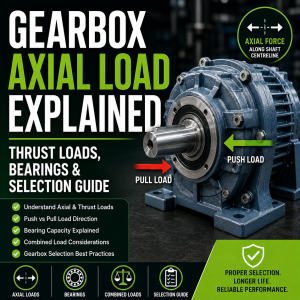
One of the biggest practical differences between aluminium and cast iron gearboxes is weight. Aluminium gearboxes are much easier to lift, position and install, especially on smaller machinery where the gearbox may be mounted directly onto a light frame or bracket.
This makes aluminium a good choice for compact machines, adjustable equipment and applications where the gearbox may need to be removed for servicing. A lighter gearbox can also reduce stress on the machine frame, particularly when the gearbox is mounted in a suspended or unsupported position.
Cast iron gearboxes are heavier, but that extra mass can be useful in demanding applications. A heavier housing can provide greater stability, reduce movement under load and help the gearbox remain rigid when exposed to high torque or vibration.
Strength, Shock Loads and Industrial Duty
If your gearbox will be used on a light conveyor or small driven shaft, aluminium is usually strong enough. However, if the gearbox is used on a heavy conveyor, mixer, auger or industrial production line, cast iron is usually the safer choice.
Shock loading is one of the main reasons to choose cast iron. Applications with sudden stops, jams, heavy starts or reversing loads can place high stress on the gearbox housing. Cast iron offers better resistance to these loads and helps maintain the internal alignment of bearings, shafts and gears.
This is especially important when pairing gearboxes with larger motors for gearboxes or when the driven machine has a high inertia load.
Corrosion Resistance and Environment
Aluminium has good natural corrosion resistance, which makes it suitable for many clean industrial environments. It can be a practical option for indoor machinery, light-duty processing equipment and applications where the gearbox may be exposed to mild moisture or washdown conditions, depending on the gearbox specification.
Cast iron is very strong, but it can corrode if the coating or paint finish is damaged. In harsh environments, the finish, seals, breather position and maintenance schedule become especially important. For dirty, dusty, damp or outdoor applications, the gearbox should be selected with the full operating environment in mind.
If the gearbox is being used with a motor in a conveyor or production environment, it is also worth checking suitable motors for conveyors to make sure the complete drive system is matched correctly.
Heat Dissipation and Duty Cycle
Gearboxes generate heat during operation, especially when running continuously, carrying high loads or operating at high reduction ratios. Aluminium can dissipate heat well because it has good thermal conductivity, which is useful on smaller gearboxes and compact machinery.
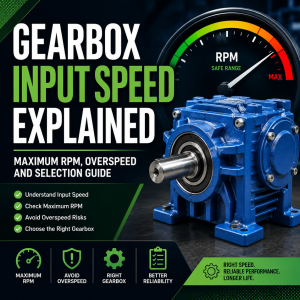
However, heat performance is not only about the housing material. Gearbox size, oil capacity, ratio, input speed, load, ambient temperature and mounting position all affect operating temperature.
Cast iron housings may not dissipate heat as quickly as aluminium, but larger cast iron gearboxes often have greater oil volume, stronger construction and better suitability for high-load industrial duty. For continuous-duty use, always check the gearbox rating and service factor rather than choosing based on housing material alone.
Which Housing Material Is Better for Worm Gearboxes?
For smaller worm gearboxes, aluminium is often the standard and most practical housing material. It keeps the unit compact, lightweight and cost-effective while still offering good performance for general machinery.
For larger worm gearboxes, cast iron becomes more common because the torque, shaft loads and housing stresses increase. As gearbox frame size increases, rigidity becomes more important. The larger the gearbox and the heavier the duty, the more likely cast iron becomes the preferred choice.
As a general rule:
- Choose aluminium for compact, light and medium-duty worm gearbox applications.
- Choose cast iron for larger frames, heavier loads and harsher industrial use.
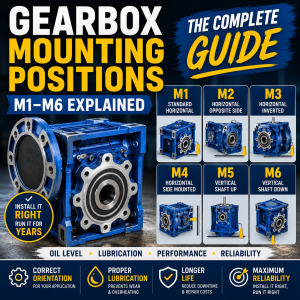
- Do not choose housing material in isolation — always check torque, ratio, bore size, input flange, service factor and mounting position.
Aluminium vs Cast Iron Motors: Why the Same Logic Applies
The same material choice also applies when selecting electric motors. Aluminium motors are lightweight, easy to handle and widely used across small to medium-duty machinery. Cast iron motors are heavier, stronger and often preferred for larger industrial applications where vibration, durability and long service life matter.
For lighter machinery, Amtecs aluminium motors are a practical match for compact gearboxes and general-purpose drive systems. For heavier industrial applications, Amtecs cast iron motors are often better suited to demanding operating conditions.
If you are selecting a complete motor and gearbox package, the motor housing and gearbox housing should both be suitable for the same level of duty. A heavy-duty cast iron gearbox paired with an undersized light-duty motor may still fail if the full drive system is not correctly matched.
Which Gearbox Housing Material Should You Choose?
The best choice depends on how hard the gearbox needs to work. Aluminium is ideal for compact, lightweight and cost-effective drive systems. Cast iron is better for heavy-duty machinery where strength, rigidity and long-term durability are more important.
Choose aluminium if your priority is:
- Low weight
- Compact size
- Easy installation
- General-purpose machinery
- Light to medium-duty operation
- Cost-effective gearbox selection
Choose cast iron if your priority is:
- High strength
- Heavy-duty operation
- Shock-load resistance
- Long service life
- Industrial durability
- High torque or continuous-duty performance
Final Recommendation
For most small worm gearbox applications, an aluminium housing is more than suitable. It is lightweight, easy to install and ideal for compact machinery. For larger machines, high-torque applications, harsh environments or heavy-duty industrial equipment, cast iron is usually the better long-term option.
The safest approach is to select the gearbox based on the full application, not just the housing material. Check the required output torque, ratio, output bore, mounting style, motor power, input speed, duty cycle and service factor before choosing between aluminium and cast iron.
At Worm Gear Motors Online, we supply a wide range of aluminium and heavy-duty worm gearboxes, electric motors and motor-ready gearbox options to suit light, medium and industrial-duty applications. Browse our full gearboxes range or explore our AC motors to build the right drive solution for your machine.
FAQs
Are aluminium gearboxes strong enough for industrial use?
Yes, aluminium gearboxes are strong enough for many light and medium-duty industrial applications. They are commonly used on conveyors, packaging machines, automation equipment and compact machinery. For heavy-duty or shock-load applications, cast iron is usually a better choice.
Are cast iron gearboxes better than aluminium gearboxes?
Cast iron gearboxes are better for heavy-duty applications because they offer greater strength, rigidity and shock-load resistance. Aluminium gearboxes are better when weight, compact size and ease of installation are more important.
Do aluminium gearboxes corrode?
Aluminium has good natural corrosion resistance, making it suitable for many indoor and general-purpose environments. However, the full gearbox specification, seals, paint finish and working environment should still be checked before use in wet, dirty or corrosive conditions.
Are cast iron gearboxes always heavier?
Yes, cast iron is much denser than aluminium, so cast iron gearboxes are usually significantly heavier. This can make installation more difficult, but the extra weight also improves strength and stability in heavy-duty applications.
Which gearbox housing is best for conveyors?
For light conveyors, an aluminium worm gearbox may be suitable. For heavy conveyors, frequent starts and stops, high loads or long operating hours, a cast iron gearbox is often the better option.
Should I choose gearbox material based on motor size?
Motor size is one factor, but it should not be the only one. You should also consider output torque, shock loading, duty cycle, mounting position, gearbox ratio, bore size and the driven machine. Larger motors and heavier loads usually benefit from stronger gearbox housings.