Why Industrial Gearboxes Fail (And How to Prevent It)
Industrial gearboxes are designed to handle demanding loads, continuous operation, and harsh environments. However, despite their robust construction, gearbox failures are still one of the most common causes of downtime in industrial systems.
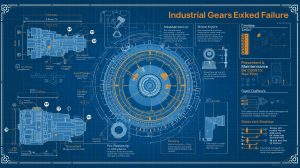
The good news is that most gearbox failures are not random. In fact, they are usually caused by predictable and preventable issues such as poor lubrication, contamination, misalignment, and overloading :contentReference[oaicite:0]{index=0}.
In this guide, we break down the most common causes of gearbox failure, how to spot early warning signs, and what you can do to prevent costly breakdowns. If you are reviewing or upgrading equipment, you can also explore our full range of gearboxes, including efficient helical bevel gearboxes, the proven Motovario B Series, popular sizes like the Motovario B103, and compact worm gearboxes.
The Most Common Causes of Gearbox Failure
Although gearboxes contain many components, most failures fall into a small number of root causes. Understanding these is the key to prevention.
1. Poor Lubrication
Lubrication issues are the number one cause of gearbox failure. Inadequate lubrication, incorrect oil type, or degraded lubricant can quickly lead to excessive friction, overheating, and rapid wear :contentReference[oaicite:1]{index=1}.
Even small lubrication problems can escalate quickly, especially in high-load or continuous-duty applications. In worm gearboxes, incorrect lubrication is one of the leading causes of early failure :contentReference[oaicite:2]{index=2}.
2. Contamination
Contaminants such as dirt, water, and metal particles can enter the gearbox through seals or during maintenance. These contaminants act like abrasive material inside the gearbox, accelerating wear and damaging gears and bearings :contentReference[oaicite:3]{index=3}.
Contaminated oil often appears dark, cloudy, or contains visible particles — all clear warning signs of internal damage.
3. Misalignment
Misalignment between the motor, gearbox, and driven load is a major cause of premature failure. Even slight misalignment can lead to uneven load distribution, increased vibration, and accelerated wear of gears and bearings :contentReference[oaicite:4]{index=4}.
Over time, this can result in gear tooth damage, bearing failure, and eventual breakdown of the entire system.
4. Overloading
Operating a gearbox beyond its rated capacity places excessive stress on internal components. This can cause gear tooth cracking, bending fatigue, and sudden failure under load :contentReference[oaicite:5]{index=5}.
Overloading is particularly common when service factor is ignored during gearbox selection.
5. Bearing Failure
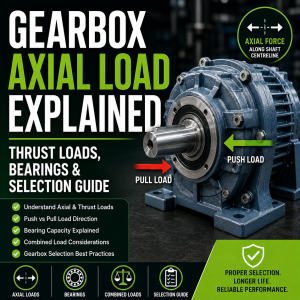
Bearings are critical components inside any gearbox. When they fail, they often cause secondary damage to gears and shafts. Bearing failure is typically linked to poor lubrication, contamination, or excessive load :contentReference[oaicite:6]{index=6}.
Once bearing wear begins, vibration increases and failure can escalate rapidly.
6. Gear Wear and Damage
Gear teeth can fail due to wear, pitting, cracking, or breakage. These issues are often caused by a combination of lubrication failure, overload, and contamination :contentReference[oaicite:7]{index=7}.
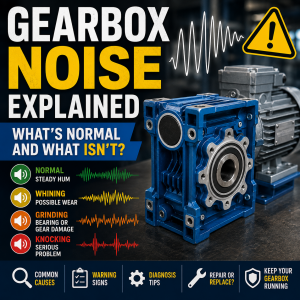
Gear damage typically leads to increased noise, vibration, and loss of efficiency before complete failure occurs.
Early Warning Signs of Gearbox Failure
Most gearbox failures do not happen instantly. There are usually warning signs that indicate a problem is developing.
- Unusual noise such as grinding, whining, or knocking
- Increased vibration during operation
- Excessive heat or rising operating temperature
- Oil contamination or visible metal particles
- Reduced performance or loss of torque
- Oil leaks from seals or housing
Identifying these signs early allows maintenance teams to address issues before they become major failures.
How to Prevent Gearbox Failure
The majority of gearbox failures can be avoided with the right maintenance practices and correct equipment selection.
1. Maintain Proper Lubrication
Always use the correct lubricant type and viscosity for the gearbox and application. Regularly check oil condition and replace it according to the manufacturer’s recommendations.
Proper lubrication reduces friction, prevents overheating, and significantly extends gearbox life.
2. Keep Contamination Out
Ensure seals are in good condition and prevent dirt, dust, and moisture from entering the gearbox. Clean handling during maintenance is also essential.
Using clean, high-quality oil and filtering systems can dramatically reduce wear.
3. Ensure Correct Alignment
Proper alignment between the motor, gearbox, and driven equipment is critical. Misalignment should be checked during installation and periodically during operation.
This helps prevent uneven loading and reduces stress on internal components.
4. Avoid Overloading
Select a gearbox with the correct torque rating and service factor for your application. Avoid running equipment beyond its design limits.
If your application involves shock loads or heavy duty cycles, always size the gearbox accordingly.
5. Monitor Temperature and Vibration
Regular monitoring of temperature and vibration can help detect early signs of failure. Sudden changes often indicate internal issues that need attention.
6. Choose the Right Gearbox for the Application
Using the correct gearbox type is one of the most effective ways to prevent failure. For example:
- Helical bevel gearboxes offer high efficiency and strong load capacity for continuous-duty applications
- Worm gearboxes provide compact design and high reduction ratios for lighter-duty systems
Browse our gearbox range to compare different options, including helical bevel gearboxes and compact worm gearboxes.
Why Upgrading Your Gearbox Can Improve Reliability
In many cases, repeated gearbox failures are not just a maintenance issue but a selection issue. Upgrading to a more suitable gearbox design can improve efficiency, reduce heat, and extend service life.
For example, switching from a lower-efficiency worm gearbox to a higher-efficiency helical bevel unit can reduce energy losses and improve long-term reliability in continuous-duty applications.
Modern designs such as the Motovario B Series and popular models like the B103 helical bevel gearbox are widely used in industrial systems where durability and efficiency are critical.
Final Thoughts
Industrial gearbox failure is rarely caused by a single issue. Most failures are the result of preventable factors such as poor lubrication, contamination, misalignment, or overloading.
By understanding these root causes and implementing proper maintenance and selection practices, you can significantly reduce downtime, extend gearbox life, and improve overall system reliability.
If you are reviewing your current setup or planning a new installation, explore our full range of gearboxes, including helical bevel gearboxes, Motovario B Series, and compact worm gearboxes to find the right solution for your application.