
Brake Motor vs Standard Motor: Which One Do You Need?
Choosing between a brake motor and a standard electric motor depends on how your machine needs to stop, hold position and operate under load. A standard motor is suitable for many general industrial applications, but a brake motor is often the better choice when the driven equipment must stop quickly, hold a load safely or prevent movement after power is removed.
This guide explains the difference between brake motors and standard motors, where each type is used, the key advantages of brake motors, and how to decide which option is right for conveyors, hoists, packaging machines, handling equipment, geared systems and general industrial machinery.
At Worm Gear Motors Online, we supply a wide range of industrial motors including Amtecs brake motors, 2 pole electric motors, 4 pole electric motors and motors for gearboxes.
What Is a Standard Electric Motor?
A standard electric motor is designed to convert electrical energy into mechanical rotation. In industrial applications, standard three-phase motors are commonly used to drive pumps, fans, conveyors, gearboxes, mixers, rollers, compressors and general machinery.
When power is removed from a standard motor, the motor does not stop instantly. Instead, the shaft slows down naturally depending on the load, friction, inertia and machine design. This is acceptable in many applications where precise stopping or load holding is not required.
Standard electric motors are widely used because they are simple, reliable, cost-effective and available in many speeds, power ratings, frame sizes and mounting options.
Common Applications for Standard Motors
- Pumps
- Fans and blowers
- General conveyors
- Roller systems
- Gearbox-driven machinery
- Mixers and agitators
- Machine tools
- Industrial production equipment
What Is a Brake Motor?
A brake motor is an electric motor fitted with an integrated electromagnetic brake. The brake is normally mounted at the rear of the motor and is designed to stop or hold the motor shaft when power is removed.
In most industrial brake motors, the brake is spring-applied and electrically released. This means the brake holds the motor shaft when the motor is not powered, and releases when power is applied. This makes brake motors useful for applications where controlled stopping, holding torque or safety is important.
Brake motors are commonly used on conveyors, hoists, lifting equipment, packaging machines, door systems, indexing tables and machinery where uncontrolled movement could cause product damage, process issues or safety risks.
Common Applications for Brake Motors
- Stop-start conveyors
- Incline conveyors
- Hoists and lifting equipment
- Packaging machines
- Positioning systems
- Indexing tables
- Garage doors and shutters
- Material handling machinery
- Geared motor systems requiring holding control
Brake Motor vs Standard Motor: Main Difference
The main difference between a brake motor and a standard motor is how the motor behaves when power is removed.
A standard motor will naturally coast to a stop. A brake motor can stop more quickly and hold the shaft in position once stopped.
| Feature | Standard Motor | Brake Motor |
|---|---|---|
| Stopping Method | Coasts down naturally | Uses an integrated brake |
| Holding Ability | No holding brake | Can hold shaft/load in position |
| Best For | Continuous running applications | Stop-start and holding applications |
| Cost | Usually lower | Usually higher due to brake assembly |
| Safety Control | Limited stopping control | Better for controlled stopping |
| Maintenance | Simpler | Brake wear should be checked over time |
When Should You Use a Standard Motor?
A standard electric motor is usually the best choice when the application does not need rapid stopping or holding torque. If the machine can coast safely to a stop after power is removed, a standard motor is often simpler and more cost-effective.
Standard motors are commonly used where the motor runs continuously or where stopping position is not critical. For example, pumps, fans and many basic conveyors do not usually need an integrated brake.
You may choose a standard motor when:
- The machine does not need to stop instantly.
- The load does not need to be held in place.
- The application is mainly continuous running.
- Coast-down time is not a problem.
- The lowest-cost motor option is preferred.
- The machine already has a separate mechanical or electrical braking system.
For general industrial use, categories such as 2 pole electric motors, 4 pole electric motors, 6 pole electric motors and 8 pole electric motors are useful starting points depending on the speed and torque required.
When Should You Use a Brake Motor?
A brake motor should be used when the application needs the motor shaft to stop quickly, hold position or prevent unwanted movement when power is removed. This is especially important for machinery where load movement could cause safety risks, product damage or process errors.
Brake motors are often selected for machines with frequent stopping, vertical movement, incline movement or positioning requirements.
You may choose a brake motor when:
- The machine must stop quickly.
- The load must be held in position after stopping.
- The application involves vertical or inclined movement.
- The machine has frequent start-stop cycles.
- Coast-down movement could damage products or equipment.
- The motor drives a conveyor, hoist, door, indexing table or handling system.
- The machine needs better control during stopping.
For applications that need integrated stopping control, Amtecs brake motors are commonly used across industrial machinery, conveyors, geared systems and handling equipment.
Brake Motor vs Standard Motor for Conveyors
Conveyors are one of the most common applications where customers compare brake motors and standard motors. The right choice depends on the conveyor layout, load weight, stopping requirements and whether the conveyor is flat, inclined or vertical.
Flat Conveyors
A standard motor may be suitable for a flat conveyor if the conveyor can coast safely to a stop and the load does not need to be held in position.
Incline Conveyors
A brake motor is often better for incline conveyors because the brake can help prevent the conveyor from rolling backwards when power is removed.
Stop-Start Conveyors
For conveyors that start and stop frequently, a brake motor gives better control and helps reduce unwanted movement after stopping.
Positioning Conveyors
If products need to stop in a specific place, a brake motor is usually preferred because it reduces overrun and improves stopping control.
Brake Motor vs Standard Motor for Gearboxes
Both standard motors and brake motors can be used with gearboxes. The correct choice depends on the final driven application.
A standard motor is often suitable for a gearbox if the machine runs continuously or does not need precise stopping. A brake motor is better if the gearbox is driving a conveyor, lifting mechanism, indexing table or system where the output shaft must stop and hold position.
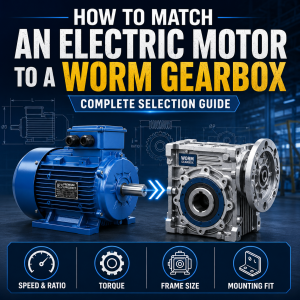
When selecting a motor for a gearbox, always check:
- Motor power: The kW rating must match the application load.
- Motor speed: 2 pole, 4 pole, 6 pole or 8 pole speed affects gearbox output speed.
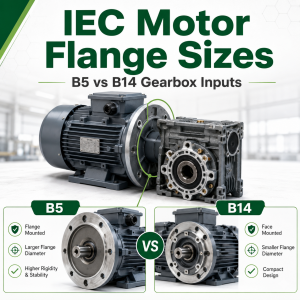
- Mounting style: The motor must physically fit the gearbox input flange or adapter.
- Shaft size: The motor shaft must match the gearbox input arrangement.
- Brake requirement: Decide whether the application needs holding or rapid stopping.
- Duty cycle: Frequent starts and stops may affect motor and brake selection.
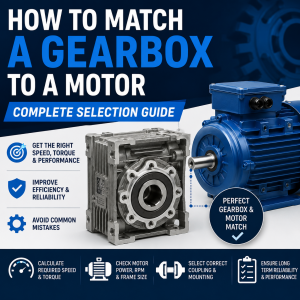
If you are replacing or matching a motor to a gearbox, browse our motors for gearboxes category to compare suitable options.
Advantages of Brake Motors
Brake motors offer several advantages in applications where movement control is important.
- Fast stopping: Helps reduce coast-down time after power is removed.
- Holding torque: Helps hold the load in place when the motor is stopped.
- Improved control: Useful for stop-start applications and positioning systems.
- Better safety: Helps reduce unwanted movement in incline or lifting applications.
- Compact design: The brake is integrated into the motor assembly.
- Good for automation: Suitable for conveyors, indexing, packaging and handling systems.
Advantages of Standard Motors
Standard motors are still the best choice for many applications. They are widely used because they are simple, reliable and cost-effective.
- Lower cost: Usually cheaper than a brake motor.
- Simpler design: Fewer components compared with a brake motor.
- Low maintenance: No brake friction parts to inspect.
- Wide availability: Available in many frame sizes, speeds and power ratings.
- Ideal for continuous running: Suitable for pumps, fans and many general machinery applications.
- Good gearbox compatibility: Can be used with worm gearboxes and other gearbox types where braking is not required.
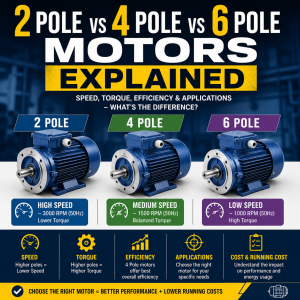
Motor Pole Speed: 2 Pole, 4 Pole, 6 Pole or 8 Pole?
Whether you choose a brake motor or standard motor, you also need to choose the correct motor speed. Motor speed is often described by pole count.
| Motor Type | Typical Speed at 50Hz | Best For |
|---|---|---|
| 2 Pole Motor | Approx. 2800rpm | High-speed applications |
| 4 Pole Motor | Approx. 1400rpm | General industrial use |
| 6 Pole Motor | Approx. 900rpm | Lower-speed, higher-torque applications |
| 8 Pole Motor | Approx. 700rpm | Very low-speed applications |
For many industrial gearbox applications, 4 pole motors are the most common choice because they offer a good balance of speed, torque and availability. For slower systems, 6 pole electric motors or 8 pole electric motors may be more suitable.
Brake Motor Selection Checklist
Before choosing a brake motor, it is important to check the full application requirements. The brake must be suitable for the stopping and holding duty, not just the motor power.
- What power rating is required?
- What motor speed is needed?
- Does the application need fast stopping?
- Does the load need to be held when stopped?
- Is the machine horizontal, inclined or vertical?
- How often will the motor start and stop?
- Is the brake required for positioning, safety or load holding?
- What mounting style is required?
- Will the motor be used with a gearbox?
- What environment will the motor operate in?
Standard Motor Selection Checklist
If a standard motor is suitable, you still need to select the correct speed, frame size, mounting style, voltage and efficiency class.
- What kW rating is required?
- Is 2 pole, 4 pole, 6 pole or 8 pole speed needed?
- Is IE2 or IE3 efficiency required?
- What mounting style is needed?
- Is the motor being fitted to a gearbox?
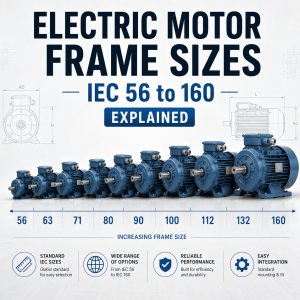
- What shaft size and frame size are required?
- Is the application continuous or intermittent?
- Does the machine already have another braking system?
For standard motor options, you can compare IE2 electric motors and IE3 electric motors depending on the efficiency requirement and application type.
Common Mistakes When Choosing Between Brake Motors and Standard Motors
Choosing the wrong motor type can cause performance issues, safety problems or unnecessary cost. Common mistakes include:
- Using a standard motor where the load needs to be held in place.
- Using a brake motor when the application does not need braking.
- Ignoring how long the machine takes to coast to a stop.
- Forgetting about incline conveyors or back-driving loads.
- Choosing the wrong pole speed for the gearbox output speed.
- Not checking brake duty on frequent start-stop applications.
- Matching only the motor power but not the mounting, shaft or frame size.
- Not considering service factor, duty cycle or load type.
Quick Guide: Which Motor Should You Choose?
| Application Requirement | Recommended Motor Type |
|---|---|
| Pump, fan or blower | Standard motor |
| Flat conveyor with no precise stopping requirement | Standard motor |
| Incline conveyor | Brake motor |
| Hoist or lifting equipment | Brake motor |
| Packaging machine with stop-start movement | Brake motor |
| General gearbox-driven machinery | Standard motor or brake motor depending on stopping needs |
| Indexing or positioning system | Brake motor |
| Continuous-running industrial equipment | Standard motor |
Related Motor Categories
If you are deciding between a brake motor and a standard electric motor, the categories below can help you compare brake motor options, standard motor alternatives, pole speeds, efficiency classes and gearbox-compatible motors.
Frequently Asked Questions
What is the main difference between a brake motor and a standard motor?
The main difference is that a brake motor has an integrated brake to stop or hold the motor shaft, while a standard motor usually coasts to a stop when power is removed.
When should I use a brake motor?
You should use a brake motor when the machine needs fast stopping, controlled stopping, holding torque or prevention of unwanted movement. Common examples include incline conveyors, hoists, packaging machines and positioning systems.
When is a standard motor better?
A standard motor is usually better for continuous-running applications where stopping position is not critical, such as pumps, fans, blowers and general machinery.
Can a brake motor be used with a worm gearbox?
Yes, brake motors can be used with worm gearboxes where the application needs the gearbox output to stop or hold position. This is common on conveyors, handling equipment and geared drive systems.
Do brake motors stop instantly?
A brake motor can stop much faster than a standard motor, but stopping time depends on the brake torque, load inertia, gearbox ratio and application design.
Are brake motors more expensive than standard motors?
Yes, brake motors usually cost more because they include an integrated brake assembly. However, they can be the correct choice when controlled stopping or holding is required.
Do brake motors need maintenance?
Brake motors may require periodic inspection because the brake friction components can wear over time, especially in frequent start-stop applications.
Final Advice: Choose Based on Stopping and Holding Requirements
The easiest way to decide between a brake motor and a standard motor is to ask what happens when the motor stops.
If the machine can safely coast to a stop and does not need to hold position, a standard motor is usually suitable. If the load must stop quickly, stay in position or avoid rolling backwards, a brake motor is normally the better choice.
Before selecting a motor, always check the required power, speed, frame size, mounting style, gearbox compatibility, duty cycle and load type. Choosing the right motor from the start helps improve machine reliability, safety and long-term performance.
For help comparing suitable options, browse our Amtecs brake motors, 4 pole electric motors and motors for gearboxes categories.