
Helical gearboxes are one of the most widely used power transmission solutions in industry thanks to their smooth operation, high efficiency, strong torque transfer, and excellent reliability in continuous-duty applications. Whether you are specifying a gearbox for conveyors, packaging machinery, mixers, pumps, or automated production systems, understanding how helical gearboxes work can help you choose the right solution for performance, lifespan, and energy efficiency.
In this guide, we explain what helical gearboxes are, how they work, where they are used, their key advantages, and how to select the right unit for your application. We also compare them with other common gearbox types so you can make a more informed buying decision.
What Is a Helical Gearbox?
A helical gearbox is a type of speed reducer that uses helical gears to transmit power between the motor and the driven machine. Unlike spur gears, which have straight teeth, helical gears have angled teeth that engage gradually. This creates smoother meshing, quieter operation, and improved load distribution across the gear teeth.
Because the teeth engage more progressively, helical gearboxes are known for their high efficiency, reduced vibration, and ability to handle heavier loads than many alternative gearbox designs. They are commonly used in applications where dependable torque transmission and long operating life are essential.
Helical gearboxes are available in several configurations, including inline helical designs and helical bevel versions, depending on the required mounting arrangement and output shaft orientation.
How Does a Helical Gearbox Work?
A helical gearbox works by reducing the input speed from an electric motor and increasing output torque through one or more stages of helical gears. The angled gear teeth allow multiple teeth to be in contact at the same time, which spreads the load more evenly and produces a smoother transfer of power.
When the motor drives the input shaft, the helical gears mesh and progressively reduce rotational speed across the gearbox stages. As speed decreases, available torque increases. This makes the gearbox suitable for machinery that needs controlled speed and stronger turning force at the output shaft.
The final output can then drive conveyors, agitators, rollers, feeders, lifting systems, and many other mechanical assemblies across industrial environments.
Main Advantages of Helical Gearboxes
Helical gearboxes are popular because they combine efficiency, durability, and smooth running characteristics in a compact package. Their gear tooth geometry makes them ideal for demanding industrial systems where noise reduction and continuous operation matter.
- Smooth and quiet operation: Helical teeth engage gradually rather than suddenly, reducing noise and vibration.
- High efficiency: Helical gearboxes offer efficient power transmission, helping reduce energy losses.
- Excellent load capacity: Multiple teeth can share the load, allowing higher torque transmission.
- Long service life: Even load distribution reduces wear and supports extended operating life.
- Reliable continuous-duty performance: Ideal for production lines, conveyors, and heavy-use industrial applications.
- Flexible configurations: Available in inline and bevel arrangements for different machine layouts.
Helical Gearboxes vs Other Gearbox Types
Choosing the correct gearbox often means comparing helical gearboxes with other common reducer types. Each design has its strengths depending on your application, space, torque requirement, and desired output direction.
Helical Gearboxes vs Worm Gearboxes
Helical gearboxes are generally more efficient than worm gearboxes and are often preferred where energy efficiency and continuous operation are priorities. They also tend to run cooler and offer better performance in high-duty industrial environments.
Worm gearboxes, however, are often chosen where compact right-angle reduction and high reduction ratios are needed in a smaller footprint. If you want to compare alternatives, browse our worm gearboxes range.
Helical Gearboxes vs Inline Gearboxes
Inline helical gearboxes are a sub-type of helical gearbox where the motor and output shaft remain on the same axis. They are ideal for straight-through power transmission and are commonly used in conveyors, material handling systems, and production equipment. View our inline gearboxes collection for compact, efficient inline solutions.
Helical Gearboxes vs Helical Bevel Gearboxes
Helical bevel gearboxes combine the smooth performance of helical gearing with a bevel gear stage to provide right-angle output. These are ideal when your machine layout requires a 90-degree drive arrangement without sacrificing efficiency or torque handling. You can explore our helical bevel gearboxes range for this style of reducer.
Common Applications for Helical Gearboxes
Helical gearboxes are used across a huge range of industries because of their versatility and dependable performance. They are especially useful where machinery runs for long periods and smooth power delivery is critical.
- Conveyor systems in warehouses, logistics hubs, and manufacturing plants
- Packaging machinery requiring controlled speed and repeatable motion
- Mixers and agitators in food, chemical, and process industries
- Pumps and fans where efficient continuous-duty operation matters
- Material handling equipment such as feeders, elevators, and transfer systems
- Automated production lines needing reliable torque and low vibration
- Recycling and waste systems where robust reduction is required
Their ability to deliver stable torque with reduced mechanical shock makes them an excellent choice for both light-duty and heavy-duty industrial systems.
Key Factors to Consider When Selecting a Helical Gearbox
Selecting the correct helical gearbox is about more than just choosing a ratio. You need to consider the full operating conditions of the application to make sure the gearbox performs reliably and lasts over time.
1. Required Output Torque
Start by calculating the torque required at the output shaft. This is one of the most important selection criteria. The gearbox must be capable of delivering the required torque safely under full load, including any peak or starting loads.
2. Gear Ratio
The ratio determines how much the input speed will be reduced and how much torque will be multiplied. A higher ratio gives lower output speed and greater torque. The ideal ratio depends on the machine’s target operating speed and load demands.
3. Motor Power and Speed
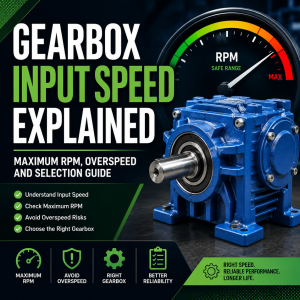
You need to match the gearbox to the motor’s kW rating and input speed. Incorrect matching can lead to underperformance, overheating, or premature wear.
4. Mounting Position
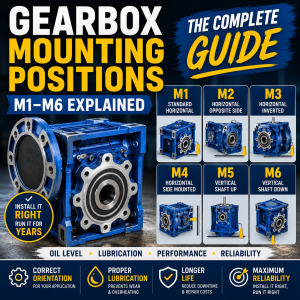
Consider how the gearbox will be mounted in the machine. Foot-mounted, flange-mounted, and shaft-mounted arrangements may affect the design you choose, lubrication behaviour, and available space.
5. Output Shaft Type
Different applications may require solid shaft, hollow shaft, keyed shaft, or shrink disc outputs. Make sure the gearbox output matches your driven equipment.
6. Service Factor
Service factor accounts for operating conditions such as shock loading, long running hours, frequent starts and stops, and harsh environments. Choosing the correct service factor helps protect the gearbox and improve longevity.
7. Environmental Conditions
Dust, moisture, washdown conditions, chemical exposure, and ambient temperature can all influence gearbox choice. In demanding environments, sealing, housing material, and lubricant specification become even more important.
When Should You Choose a Helical Gearbox?
A helical gearbox is often the best choice when you need:
- High efficiency for reduced energy consumption
- Quiet running in noise-sensitive environments
- Smooth torque transmission for precision or continuous-duty machinery
- Strong load handling for industrial applications
- Reliable long-term operation with reduced wear
If your layout requires a straight drive arrangement, an inline helical gearbox is often ideal. If you need a right-angle output with strong efficiency, a helical bevel gearbox may be more suitable. If compactness and certain high-ratio right-angle applications are the main priority, a worm gearbox may also be worth considering.
Signs You May Be Using the Wrong Gearbox
In many applications, poor system performance is caused by the gearbox being undersized, incorrectly geared, or poorly matched to the motor and load. Warning signs include:
- Excessive heat build-up during operation
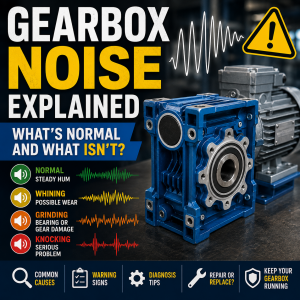
- Unusual noise or vibration
- Poor starting torque
- Premature bearing or gear wear
- Frequent overload trips
- Output speed that does not suit the machine process
If you are seeing any of these issues, reviewing the torque requirement, ratio, duty cycle, and mounting arrangement is a good place to start.
Helical Gearbox Maintenance Tips
Although helical gearboxes are designed for durability, regular maintenance is still important for maximising service life and performance.
- Check lubricant condition and replace it according to the manufacturer’s service schedule
- Inspect seals for leaks or contamination ingress
- Monitor operating temperature for signs of overload or lubrication issues
- Listen for changes in noise levels that may indicate wear
- Check alignment between motor, gearbox, and driven load
- Inspect mounting bolts and mechanical connections regularly
Explore Gearbox Options for Your Application
If you are comparing gearbox types for a new project or replacement job, it is worth exploring the main categories side by side to understand which design best matches your machine layout and operating requirements.
Browse our main gearbox categories here:
Each gearbox type offers different strengths, so choosing the right one depends on torque demand, speed reduction, installation space, efficiency targets, and output shaft direction.
Final Thoughts
Helical gearboxes are a proven, highly efficient solution for a wide range of industrial applications. Their smooth gear engagement, strong torque capacity, reduced noise, and excellent durability make them one of the best all-round gearbox choices for modern machinery.
Whether you are specifying a new drive system, replacing an existing reducer, or comparing different gearbox designs, understanding the advantages and selection criteria of helical gearboxes will help you make a better long-term decision.
If your application needs straight-through efficiency, right-angle flexibility, or a compact alternative, make sure to compare the available options across our helical bevel gearboxes, inline gearboxes, and worm gearboxes categories.
FAQs About Helical Gearboxes
What is a helical gearbox used for?
A helical gearbox is used to reduce motor speed and increase output torque in industrial machinery such as conveyors, mixers, packaging equipment, pumps, and automated handling systems.
What are the advantages of a helical gearbox?
The main advantages of a helical gearbox are smooth operation, low noise, high efficiency, strong load capacity, and long service life in continuous-duty applications.
Are helical gearboxes better than worm gearboxes?
Helical gearboxes are generally more efficient and better suited to continuous industrial duty, while worm gearboxes can be a good choice for compact right-angle layouts and high reduction ratios.
What is the difference between inline and helical bevel gearboxes?
Inline gearboxes keep the input and output shafts on the same axis, while helical bevel gearboxes provide right-angle output for applications where installation space or machine layout requires a 90-degree drive arrangement.
How do I choose the right helical gearbox?
To choose the right helical gearbox, you should consider output torque, ratio, motor power, input speed, mounting position, shaft type, service factor, and the operating environment.