Gearbox Efficiency Explained: Where Power Is Lost and How to Improve It
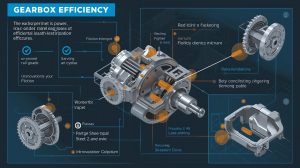
Gearbox efficiency is one of the most misunderstood aspects of power transmission. Many systems suffer from unexpected energy losses, overheating, or poor performance simply because gearbox efficiency was never considered during selection.
In this guide, we explain how gearbox efficiency works, where power is lost inside different gearbox types, and how to improve efficiency through correct selection, lubrication, and system design. Whether you are using a worm gearbox, helical gearbox, or geared motor, this article will help you reduce losses and improve reliability.
What Is Gearbox Efficiency?
Gearbox efficiency refers to how much input power is successfully transmitted to the output shaft. It is expressed as a percentage.
Efficiency (%) = (Output Power ÷ Input Power) × 100
For example, if a gearbox receives 1.0 kW of input power and delivers 0.8 kW at the output, its efficiency is 80%.
The remaining 20% is lost as heat, friction, vibration, and mechanical resistance.
Where Power Is Lost Inside a Gearbox
All gearboxes experience losses. The key is understanding where those losses occur.
- ⚙️ Gear tooth friction
- 🛢️ Bearing resistance
- 🔥 Heat generation
- 🌀 Oil churning and windage losses
- 🔩 Seal friction
The gearbox design, gear geometry, materials, and lubrication all directly affect these losses.
Gearbox Efficiency by Gear Type
Different gearbox types have very different efficiency characteristics.
Worm Gearbox Efficiency
Worm gearboxes typically have efficiencies ranging from 50% to 90%, depending on ratio and load.
- High reduction ratios increase sliding friction
- Lower ratios (e.g. 10:1) are more efficient
- High ratios (e.g. 60:1+) lose more power as heat
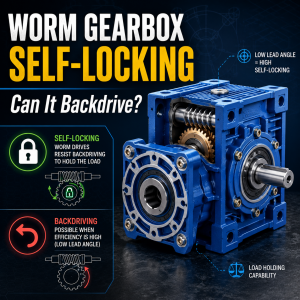
Worm gearboxes trade efficiency for compact size and self-locking capability.
Helical Gearbox Efficiency
Helical gearboxes are among the most efficient gearbox types, often achieving 95–98% efficiency per stage.
- Rolling contact instead of sliding
- Smoother torque transmission
- Lower heat generation
They are ideal for continuous-duty and energy-sensitive applications.
Bevel and Helical-Bevel Gearboxes
Bevel and helical-bevel gearboxes typically achieve 94–97% efficiency.
- Used where right-angle drives are required
- Higher efficiency than worm gearboxes
- More expensive but lower lifetime energy cost
How Gear Ratio Affects Efficiency
Higher gear ratios generally reduce efficiency, especially in worm gearboxes.
- More tooth contact = more friction
- Higher sliding forces
- Increased oil shear losses
In many cases, using a multi-stage geared motor or combining a gearbox with a VFD is more efficient than a single high-ratio gearbox.
Heat: The Hidden Enemy of Gearbox Efficiency
Lost power becomes heat. Excessive heat reduces lubrication performance, accelerates wear, and lowers efficiency even further.
- Oil viscosity drops at high temperature
- Gear tooth wear increases
- Seal life is reduced
Proper cooling and correct oil selection are essential for maintaining gearbox efficiency.
Lubrication and Its Impact on Efficiency
Lubrication plays a critical role in gearbox efficiency.
- Too thick oil increases drag
- Too thin oil increases wear
- Incorrect oil reduces efficiency and lifespan
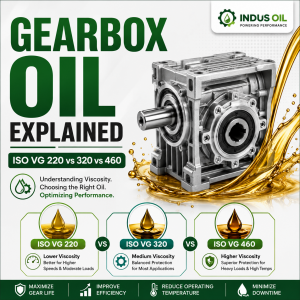
Always follow manufacturer oil grade recommendations, especially for worm gearboxes where oil choice has a major efficiency impact.
Load Conditions and Efficiency
Gearboxes operate most efficiently near their rated load.
- Light loads increase relative friction losses
- Overloading increases heat and wear
Correct sizing ensures the gearbox operates in its optimal efficiency range.
How to Improve Gearbox Efficiency
- ✔️ Select the correct gearbox type
- ✔️ Avoid excessive gear ratios
- ✔️ Use correct lubrication
- ✔️ Size gearbox for continuous load
- ✔️ Ensure proper alignment
- ✔️ Maintain correct operating temperature
In many applications, replacing a worm gearbox with a helical or bevel gearbox can reduce energy losses dramatically.
Worm Gearbox vs Helical Gearbox: Efficiency Comparison
While worm gearboxes are compact and self-locking, they are less efficient than helical alternatives.
- Worm gearbox: 50–90%
- Helical gearbox: 95–98%
For high-duty or continuous operation, higher-efficiency gearboxes often pay for themselves in reduced energy costs.
Gearbox Efficiency and Electric Motors
Gearbox losses increase the load on the electric motor.
Lower gearbox efficiency means:
- Higher motor current draw
- Increased motor temperature
- Reduced motor efficiency
Matching the gearbox correctly with an electric motor or geared motor is essential.
Gearbox Efficiency FAQs
1. What is a good gearbox efficiency?
Above 95% for helical gearboxes and above 80% for worm gearboxes at moderate ratios.
2. Why are worm gearboxes less efficient?
Because of high sliding friction between the worm and wheel.
3. Does higher gear ratio reduce efficiency?
Yes, especially in worm gearboxes.
4. Can lubrication improve efficiency?
Yes, correct oil reduces friction and heat.
5. Do gearboxes lose efficiency over time?
Yes, due to wear and oil degradation.
6. Is heat a sign of poor efficiency?
Excessive heat usually indicates high losses.
7. Are helical gearboxes always better?
Not always — worm gearboxes are useful where self-locking is required.
8. Can a VFD improve gearbox efficiency?
Indirectly, by reducing mechanical gearing requirements.
9. Do seals affect efficiency?
Yes, seal friction contributes to losses.
10. Does alignment affect gearbox efficiency?
Poor alignment increases friction and wear.
11. What oil is best for worm gearboxes?
Manufacturer-specified synthetic oils are often best.
12. Does load level affect efficiency?
Yes, gearboxes are most efficient near rated load.
13. Is a multi-stage gearbox less efficient?
Each stage adds losses, reducing overall efficiency.
14. Can cooling improve efficiency?
Yes, by maintaining optimal oil viscosity.
15. Are self-locking gearboxes efficient?
No, self-locking increases friction.
16. Do higher efficiency gearboxes cost more?
Yes, but often save money long-term.
17. Does efficiency affect motor size?
Yes, low efficiency increases required motor power.
18. How do I calculate gearbox efficiency?
Output power divided by input power.
19. Can worn gears reduce efficiency?
Yes, significantly.
20. Do right-angle gearboxes lose more power?
Depends on design — bevel gearboxes are efficient.
21. Can I replace a worm gearbox with a helical one?
Often yes, if self-locking is not required.
22. Does oil level matter?
Yes, too much oil increases churning losses.
23. Are aluminium gearboxes less efficient?
Material affects heat dissipation, not efficiency directly.
24. Can efficiency drop under light load?
Yes, relative friction losses increase.
25. Is efficiency constant across speeds?
No, speed affects friction and oil losses.
26. Can efficiency be improved after installation?
Yes, through lubrication and alignment.
27. Are geared motors more efficient?
They reduce losses from misalignment.
28. Does gearbox mounting position matter?
Yes, it affects lubrication distribution.
29. Should I oversize a gearbox?
Slightly, but excessive oversizing reduces efficiency.
30. Can you help choose the most efficient gearbox?
Yes — our team can recommend the best solution for your application.
Need a More Efficient Gearbox?
At Worm Gear Motors Online and Drive Outlet Megastore, we stock a wide range of worm gearboxes, helical gearboxes, and geared motors to suit all applications.
If efficiency, reliability, and long-term cost matter, contact our team and we’ll help you choose the right gearbox first time.